

French Naturalism #
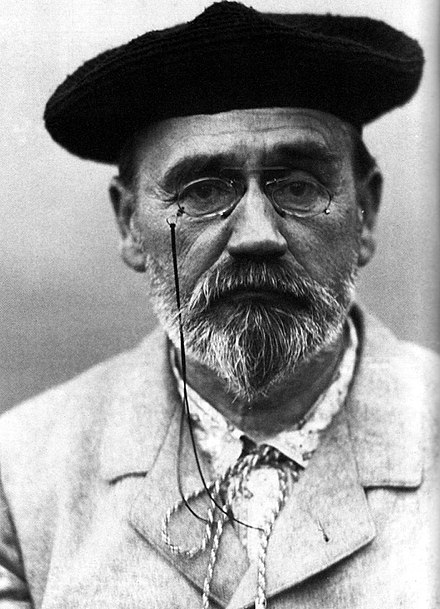
Naturalism is a literary movement born in France around 1870-1880 as a direct application of Positivism to literature. Its main representative was Émile Zola, who wanted to turn the novel into a scientific experiment.
1. Main Ideas #
- Literature must describe reality objectively, like a scientist observing an experiment
- The writer is a scientist of society: observes, documents and analyzes
- Characters are determined by heredity (genetics), environment (social conditions) and historical moment
- No embellishment: reality must be shown as it is, including its ugliest sides
- Focus on the lower classes: workers, miners, prostitutes, alcoholics
📝 Key concept: Zola said the novelist should work like a doctor performing an autopsy: coldly, objectively, without emotion.
2. Émile Zola and the Experimental Novel #
Zola wrote a theoretical essay, The Experimental Novel (1880), where he explained:
- The novel is a laboratory where the writer places characters in specific conditions
- The writer observes how characters react based on their temperament and environment
- The goal is to demonstrate social and biological laws
The Rougon-Macquart cycle #
Zola wrote 20 novels about the Rougon-Macquart family across several generations, showing how heredity and environment determine behavior:
- L’Assommoir (1877): alcoholism in working-class Paris
- Nana (1880): prostitution and moral decay
- Germinal (1885): life of miners and working-class struggle

3. Naturalism vs Verismo #
| French Naturalism | Italian Verismo | |
|---|---|---|
| Country | France | Italy |
| Key figure | Zola | Verga |
| Setting | Cities, factories | Rural South, Sicily |
| Characters | Urban working class | Peasants, fishermen |
| Author’s role | Scientists with a social mission | Invisible narrator |
| Goal | Denounce and change society | Simply document reality |
Conclusion #
French Naturalism was the literary arm of Positivism: it tried to apply the scientific method to literature, studying society like a biologist studies organisms. Although its rigidly “scientific” approach had limitations, it opened the door to realistic literature and deeply influenced Italian Verismo.
Reply by Email